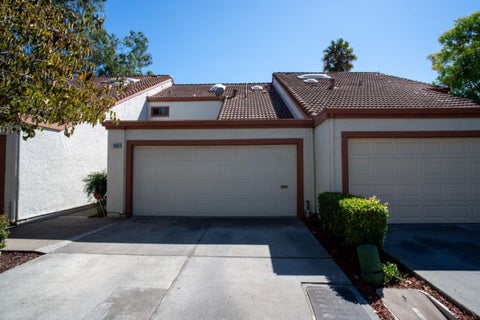
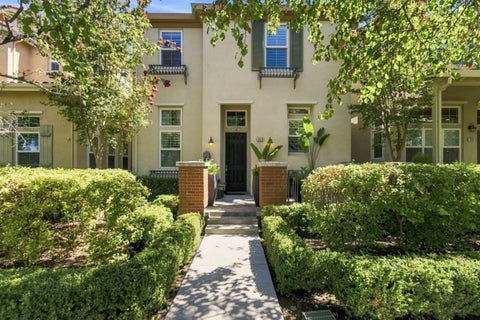
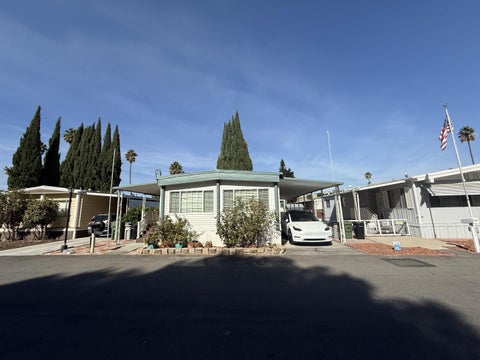
How is the Campbell real estate market? Campbell is in a prolonged strong seller’s market, but this summer we’ve finally seen some cooling in this popular West Valley community. As of the latest data, however, the single family market remains in the seller’s favor, while buyers have the advantage in the condo and townhome market.
This article, updated monthly, offers data and analysis on the residential real estate market within this popular Silicon Valley community. Here are a few details from the latest update on Campbell’s single family housing market:
Inventory of single family homes inched up a hair from the month before, and with 26 active listings at the end of September it remains well above this time last year. The inventory for condos and townhomes also grew month-over-month, and also remains sky-high year-over-year.
Closed sales for single family homes, on the other hand, fell below last month and last year, though pending sales were up across both timeframes. In the condo and townhome market the trends were the same, but far more severe!
The average sales to list price ratio for single family homes soared to 102.8% of asking, a jump of +2.0% from the month before, but down -1.1% from this time last year. Condos and townhomes, on the other hand, plunged by -3.5% month-over-month, falling below asking price at a 99.7% average and falling far below this time last year.
The condo and townhome market is typically much softer than the single family home market, so take this swing with a grain of salt – with just 5 closed sales, one or two outliers can cause significant swings in the sales data like we’ve seen this month!
Average time on market for single family homes slowed to a 48 day average, more than twice as long as the month before, and more than 2 weeks slower than this time last year. Sales in the condo and townhome market also slowed, and the days of inventory nearly doubled from the month before stretching to a jaw-dropping 226 days for market absorption.
What has been happening in Campbell this year? So far we’ve seen continued activity and interest in Campbell, but with distinct seasonal trends. The market began to heat up in winter and peaked early, around February or March. By late spring we saw some up and down month-to-month, but by June the sales data signaled a clear start of summer cooling. There was some up and down between July and August, which we expected, and the most recent data suggests we may still be seeing some late summer / early autumn jumps in activity, before it cools off again as we approach the holidays.
The Campbell real estate market remains in the seller’s favor overall, but is occasionally dipping towards balanced. Some properties are still seeing hot competition while others may be going stale.
The Campbell, CA Real Estate Market
It’s hard to predict what’s coming next, especially with so many shockwaves eminating from D.C.. Silicon Valley real estate tends to be affected by what’s happening in the tech market and connected to the global economy since many buyers rely on stocks and mortgage loans to finance their purchase. On top of that, we’re emerging from an already wild few years – the 2020s have been a rollercoaster ride! That said, Silicon Valley remains a desirable place to live and own property, and while we’ve seen some cooling over the last year, it remains one of the hottest markets in the country.
If you’re selling a well prepared, beautifully staged, and aggressively priced house, you’ll likely see multiple offers on your home for sale. We’ve still been seeing the occasional bidding war, especially with the best homes in the most popular markets, though it’s nowhere near as crazy as the 2021 peak. We are also seeing a bit of that K-shaped economy in the housing market right now – the higher end market, especially in sought after communities, is seeing heated demand while buyers and sellers on the lower end or entry-level housing are seeing more softening. Inventory is up, but following years of below-average and record breaking low numbers of homes for sale there’s still far more demand than what is available, especially for a move-in ready home!
All that said, we don’t expect a balanced market any time soon. The Bay Area still has a severe housing shortage and a backlog of buyers clamoring to get into a home!
Here’s a quick view of the Campbell real estate market stats from Altos Research, using list prices (not sales price) which updates automatically about once per week:
And now – here are some quick stats, pulled from the MLS (Multiple Listing Service) through the RE Report.
How is the Morgan Hill real estate market? Signals indicate it is a seller’s market, though it’s notably milder than other parts of the county. Below are some quick points from our RE Report (link below).
Available inventory grew from the month before, rising well above this time last year for single family homes (SFH). In the condo and townhome market, however, it shrank month-to-month and year-over-year.
Closed and pending sales fell sharply month-over-month and year-over-year for SFH. For condos and townhomes, pending sales slipped and closed sales grew from the month before, but both are up from last year.
The average sale to list price ratio slipped in SFH but rose in the condo market from the month before, however both markets were up from this time last year, and both are hovering a hair below asking.
Days on market slowed across both markets. While single family homes took 39 day on average to sell, condos and townhomes took 54 days to sell on average. Those numbers have gotten closer in recent months, but they remain a clear indicator of the difference in activity between the two markets.
It’s a mild seller’s market that is cooling off again after a little mid-summer heating. There’s competition for the best homes in Morgan Hill, but possibly a buyer’s market in other sectors. As always, it’s important to analyze homes on a case by case basis.
The cities of Morgan Hill and Gilroy usually experience a lower demand than other parts of Santa Clara County which are either tech magnets, closer to big businesses, or a quicker commute around the Bay Area. So if most of the Silicon Valley has a sale price to list price ratio of anywhere from 105% to 110%, you might see closer to 97% to 103% here. Not exact numbers, just to say it’s generally lower here making the home buying conditions calmer for weary buyers, even if it is still a sellers market.
Now let’s get into the data.
First up, the market profile from Altos Research – this is updated weekly, so check back often! You can also view the weekly newsletter through the link below, where you can also subscribe to receive this update every week in your inbox. Prefer a particular zip code instead? You can type in your desired zip in the “Search Anywhere” line and then request that particular weekly update by email.
Please note that Altos uses information on actively listed homes for sale, not closed sale data. If you compare the days on market of the active listings with the days on market of the sold properties, they will be different.
Trends at a Glance for Single Family Homes in Morgan Hill
Month-over-month, the September market shows signs of cooling – with more homes available, buyer competition has eased up a bit. There may be more or less competition in certain segments of the market, but overall it’s a mild seller’s market with more opportunity for the weary homebuyer to get their foot in the door.
Trends at a Glance
Trends At a Glance
Sep 2026
Previous Month
Year-over-Year
Median Price
$1,560,000 (+2.0%)
$1,530,000
$1,453,750 (+7.3%)
Average Price
$1,623,540 (-4.8%)
$1,705,120
$1,598,210 (+1.6%)
No. of Sales
17 (-29.2%)
24
32 (-46.9%)
Pending
24 (-7.7%)
26
36 (-33.3%)
Active
72 (+7.5%)
67
48 (+50.0%)
Sale vs. List Price
99.8% (-1.2%)
101.0%
97.8% (+2.0%)
Days on Market
39 (+67.9%)
23
35 (+11.4%)
Days of Inventory
123 (+46.7%)
84
44 (+182.4%)
Single Family Home Live charts from Altos Research(more…)
The Saratoga CA real estate market in September stayed a strong seller’s market for single family homes, and a mild seller’s market for townhouses and condominiums.
Monthly trends at a glance for the Saratoga CA Real Estate Market
DATA REMINDER:Please note that the RE Report data is often a LITTLE different from the numbers when I pull them directly from the MLS. This is because the RE Report has a feed only of listings that were input by the listing agents directly into MLS Listings. That feed does not include anything from Bay East, CRMLS, or other MLS companies.
The market is generally improved compared to a year ago, though the median sale price is lower and the sale to list price range is lower as well. Pending sales have dropped, though, pointing to a cooler climate ahead.
How long does it take to sell a home in Silicon Valley right now? It depends on what segment of the real estate market the property is in, and what type it is. Most homes are selling in 3-4 weeks.
How long does it take to sell a home in Santa Clara County?
First, for the success stories, the properties that do sell, what’s the timeframe?
Houses which have closed escrow averaged 27 days in September 2022 so far
Also in September, the median days on market is 17 days
For condos and townhouses, the average days on market so far this month is 38
The median days on market for condominiums and townhomes is 27
Pending sales – how long were they on the market?
Pending houses right now average 33 days on market
Pending condominiums and townhomes average 28 days on the market
It’s interesting to see that the more recent sales were slower for the houses but faster for condos and townhomes as compared to the closed sales.
Active listings and length of time on the market
Houses for sale in Santa Clara County that are not under contract (and not listed as “Agent Only”) average 52 days on market
For townhomes and condos, it’s an average of 44 days on market
So it seems that for the homes which DO sell (and not all homes which are listed become sale pending), the average is in the 3-4 week range. What that says, pretty clearly too, is that if your listing is well marketed but doesn’t sell in three to four weeks, you’ve got a problem.
Some types of properties will always take longer (think Santa Cruz Mountains, ultra luxury homes and others), but overall, your home should be seeing 3-5 showings per week and get at least one offer for approximately every 10 showings, which should happen within 3-4 weeks.
What if your home has been on the market for a month with no offers, or only low offers?
If your house or condo has been actively listed and marketed for more than 4 weeks and isn’t selling, it’s time to have a conversation with your agent. Every situation is different and I cannot advise anyone but my own clients about what needs to happen in your case.
I can tell you that if your home does not get an acceptable offer in 3-4 weeks, there’s a good chance that the number one obstacle is a price that’s too high for the current market. If that is the case, it’s time to make a serious change in the price – think hedge clipper, not nail clipper. Otherwise, if home values are dropping and your price does not get ahead of it, you will be chasing the market down. It is very expensive when that happens.
Beyond price and just getting or not getting offers, you will want to understand:
how many showings are there each week?
what is the feedback from the buyer’s agents? (what are the buyers saying?)
what homes ARE selling?
how long does it take to sell if it’s underpriced? (that’s a common strategy today)
Some flaws are fixable and some are not fixable. You cannot do anything about a less desirable location or a neighbor with too many vehicles or an eyesore of a front yard. But you do control the price.
Some real estate gurus like to say “there’s no problem that the right price can’t fix”. That’s true, but sometimes there are cheaper ways to solve whatever the problem is.
In some cases, home sellers are offering to pay points on the buyer’s loan to offset the rising interest rates. Frequently it’s a lot cheaper for the seller to buy down the loan rate than to take a price reduction of 3-5%.
Once in awhile, properties listed for sale on the MLS instruct real estate professionals that the home cannot be seen until and unless there’s an accepted purchase offer on it. The way it reads in the multiple listing is this: “make offer subject to inspection“.
What does “make offer subject to inspection” mean?
This clause means that first a buyer must write an offer and get it accepted by the seller, and then – and only then – can the buyer check out the property in person. The “subject to” part means that the buyer will have a contingency for approving the home’s condition. If it is terrible or unacceptable inside, the buyer will have the right to back out. (Those terms, such as the number of days for inspection and investigation, will be spelled out in the contract.)
The idea that an contract would be written without seeing the house, townhouse, condo, duplex etc. or that someone should plunk down hundreds of thousands of dollars on a home “sight unseen” is absolutely shocking to most Silicon Valley home buyers. But “make offer subject to inspection” is the way that apartment buildings and many investment properties (duplexes, triplexes and fourplexes) are sold.
Think of it this way: if one is buying a tenant occupied property that is being sold as investment property, whether it’s 1 unit or 2o, the main thing is not so much how it looks physically, but how it looks on the books. How’s the cash flow? How good is the return on investment? What is the upside potential with renovations? (more…)
Today we’re looking at the real estate market for houses in some of the “west valley” communities along the base of the Santa Cruz Mountains – areas where schools are good, crime is low, residents enjoy scenic views of the hills (or of the valley from the hills, depending on the location) and overall, a highly educated population not too far from Highway 85. This will be a real estate market comparison for Los Gatos, Saratoga, Cupertino, and Los Altos.
Of the four municipalities, three are really very similar to each other in several regards. Cupertino has the largest population – about 61,000 people – but Los Altos, Los Gatos and Saratoga are all similarly sized, somewhere between 31,000 residents. The latter three also enjoy a traditional “downtown” area which is popular with pedestrians, bicyclists and motorists alike. (Monte Sereno has under 4,000 residents, which is so small that the statistics are very easily thrown from month to month, so it is omitted in this quick study.) Of the four, Cupertino, then, is the least similar due to size and lack of a central downtown area for now. This may feel different once the Vallco Mall is redeveloped.
We’ll take a quick look at these areas now in terms of the real estate market trends and statistics for each area, considering just “class 1” (houses and duet homes). The charts used below are from Altos Research, to which I have a subscription, and they will be automatically updated each week.
Please note: the Los Gatos data is probably a little artificially low as it will include all 3 zip codes, meaning also the Los Gatos Mountains, which are quite a bit more affordable than the areas “in town”.
In addition, as of this writing we are in the shelter-in-place phase 1 of the pandemic. This post is updated approximately every quarter or half-year, so we’re just starting to see the results of these changes to the market, but it will take a while to see the full picture. For now you can read more about the Coronavirus impact on real estate sales in my post on the topic.
Also, during the shutdown so far, the Multiple Listing Service (MLS) stopped the timer on all Days on Market (DOM). Therefore these numbers will be off beginning from March 17th through around May 17th. In the data below, this will affect any numbers related to the days on market, the absorption rate, and the days of inventory.
As a real estate consumer, do you pay attention to the days on market? In some cases, it can be difficult to tell how long a home has been offered for sale because there are a myriad of marketing channels now, especially online. It’s almost a twist on the old concept of shadow inventory. The days on market deception is pronounced in some cases, though happily, it seems to be far from all of them.
Why is the days on market data murky sometimes?
The MLS in our area, MLS Listings, shows both a list date (when the home was entered onto the MLS for public viewing) and a “Days On Market” (or DOM). In the best of all possible scenarios, those line up seamlessly and reflect the total marketing period. In some MLS organizations, they also show a Continuous Days On Market or CDOM, representing the total days, including any breaks in time or switches between agents / brokers in listing the property.
Days on market deception in practice
Here’s where there can be confusion on the actual days of market exposure:
being listed, for up to 30 days, on the “coming soon” section of our MLS (won’t be displayed on the regular MLS for the public or real estate agents)
being held open for a week or two before getting exposure on the multiple listing (not tracked on the MLS)
other marketing offline, such as “coming soon” signs, advertisements, or mailers (not tracked by the MLS)
being listed in a non-mls private listings club (data not shared with the MLS)
getting promoted on Redfin or other sites as a coming soon – even the disclosure platform, Disclosures.io, now solicits for these pre-market listings on their site (information feed is one way: the MLS can tell Redfin about the listing, but Redfin doesn’t tell the MLS about coming soons)
going on and off the MLS with a 30 day break or more will halt the timer for days on market (even if the list date remains the same)
pocket listings or whisper listings that sell without ever going on the MLS at all (but still had a marketing period, possibly with the sale reported on the MLS for comp purposes only)
homes listed, then canceled, then relisted with another broker after a month off the mls will show as a “new” listing and DOM will be zero (in some places with a different MLS, the CDOM would list all of the days – better data)
All of these factors can really obscure the data and make it difficult for consumers (and sometimes buyer’s agents) to know how long a home has actually been receiving market exposure. And we don’t know the exact number of listings impacted because it’s not being tracked.
The market in early 2019 began heating up in a seasonally normal pattern but has now leveled off with a little up, a little down, but not too far from 20 days to sell. Prices are similarly a bit up and down but overall seeming to level out.
Today I want for us to take a quick look at the seasonal patterns for days to sell which tend to be present for houses selling in the city of San Jose over the course of a year. Please note that the pattern can be similar – but the depth or severity of the pattern can vary quite dramatically year to year, or between one location or price point and another.
I really like taking a multi-year view (which almost no one seems to do, it is nearly always only year over year) to get a broader sense of what is normal – or at least what appears to be a regular pattern.
In the graph below, you’ll see that most years see inventory rising in January or February. We had a highly overheated pattern in all of 2017 and early 2018, and visually it’s pretty evident that they were moving to a beat of a different drummer.
Graph – San Jose average days to sell a single family home
Now let’s look at the actual numbers as of today, June 12, 2019. This number may be different when June is completed, but right now we have 23 days to sell on average. That is longer than 2014-2018, but shorter than 2013 (which was a good year).
Compared to 2015 to 2018, San Jose’s current average days to sell of 23 seems quite high. Go back a little more to 2013 and 2014, though, and it’s not outrageous at all. Or Google what the “average days to sell” is like in most of the U.S. and you’ll find that this is not a high number at all.
Is it harder to sell a house in San Jose now than a year or two ago? Yes, absolutely! Is it a buyer’s market? No! It is becoming more balanced, though. I would call this a healthy market. Perhaps a normalizing market. Homes which are priced well, marketed well, easy enough to see and so on are selling in well under a month. That’s a good market. For a little perspective, check out the June numbers from 2002 through 2012 (the MLS won’t let me get stats further back that 2002).
San Jose days to sell a single family home 2002-2012
Altos charts for single family homes (houses and duet homes) in San Jose CA
Using the Altos Charts (I have a subscription), here’s a view of 4 pricing tiers within San Jose residential real estate which is for sale – not sold – right now. Days to sell charts the success stories, the ones that go under contract! This info charts ALL LISTINGS which are active or as yet unsold.
Have a look:
A normal market is not a bad one. Buyers are less rushed, Sellers who are reasonably aggressive on price, condition, marketing, access, etc. are having success. Overpriced homes, homes with too many issues or which are too hard to see are a different story.
Interested in buying or selling a home in San Jose? Please reach out to me!
Often the Silicon Valley real estate market takes a bit of a nosedive in December and January, only to make a comeback after the SuperBowl. Just now I ran the stats for the city of San Jose, which is big enough, at about 1 million people, to provide a good sense of the market generally.
Below please find a simple chart reflecting houses sold with the days on market and sale price to list price ratio. You can see, clearly, that the SP to LP ratio dips noticeably in December & January, and also that the days on market rise.
Even so, how bad was it? The average DOM was 38 (break-neck speed in any other part of the country) and the average SP to LP ratio fell to “only” 102%.
That was it – that was the “break” that buyers get in winter. Things are reversing course, as often they do in February, March, and April, and multiple offers with big overbids are again the major story in San Jose and throughout the Silicon Valley region. Just this last week I heard of a home in this valley that got 45 offers.
Home buyers, want to purchase this year? Your best bet is to be financially well equiped with 25% down or more if you are buying in any of the hotter areas. This is a nearly impossible market for FHA home buyers or for those with less than 20% down.
Home owners, want to sell this year? You can maximize your return by doing smart fixes and thorough inspections to make buyers feel confident about purchasing your property. That confidence can change the game and bring 10 offers where there might have been 5, and with the larger numbers of bidders usually there come also much larger sale prices.
Call me or email me if you would like to discuss working together and getting your best deal in the current Santa Clara County realty market.
Saratoga and Los Gatos are neighbors, but their real estate markets are not the same! Today we’ll consider the condo and townhouse market in these two upscale Silicon Valley areas and view some elements “side by side”. See what you think!
First, let’s have a peek at how fast things are selling. Saratoga & Los Gatos both are at under 3 week for the “days to sell over time”. Saratoga tends to sell a little better than Los Gatos for condominiums and townhomes, and that’s the case now as well – at least months months, and recently. (Reasons, not sure – perhaps because the location is a little closer to Cupertino and Sunnyvale and the many high tech jobs there. Or it could be related to the school scores or any number of factors.)
Saratoga days to sell over time 2014 – condos
Los Gatos days to sell over time 2014 – condos
Let’s check some other criteria and see how they stack up there. Let’s look at the new listings as opposed to the solds. How far apart are they? (The closer they are, the “hotter” the market. If the solds are going faster than the new listings are coming on, it’s a red hot seller’s market.) For most of the last year, Saratoga condominiums have been selling and closing faster than new ones have entered the market, or have tied it, except for March and April. In Los Gatos, same pattern recently of new listings outpacing sales, and in January the closed sales outpaced new inventory. But overall, it’s close to a tie or there’s a slight leaning toward new listings rather than sales unless you look back to last fall. So a little bit cooler of a market in Los Gatos by this standard.
Helping nice folks to buy and sell homes in Silicon Valley
Mary Pope-Handy, Realtor ABR, CIPS, CRS, SRES
Christie's International Real Estate Sereno, Los Gatos, CA 95030 408 204-7673 Mary@PopeHandy.com License# 01153805
Clair Handy, Realtor
GREEN
Christie's International Real Estate Sereno 214 Los Gatos-Saratoga Rd Los Gatos, CA 95030 ClairHandy@sereno.com License# 02153633
Mary & Clair sell homes throughout Silicon Valley: Santa Clara County, San Mateo County, and Santa Cruz County. with a special focus on: San Jose, Los Gatos, Saratoga, Campbell, Almaden Valley, Cambrian Park.
The real estate search
Use this link to browse properties which are for sale, under contract (pending) or sold. Want to view only homes which are available now?
Mary Pope-Handy, Realtor ABR, AHWD, CIPS, CRS, SRES Christie's International Real Estate Sereno DRE License #01153805 408-204-7673 mary@popehandy.com “Helping nice folks to buy and sell homes in Silicon Valley since 1993”
Clair Handy, Realtor, GREEN Christie's International Real Estate Sereno DRE License #02153633 408-721-6160 clairhandy@sereno.com “Helping nice folks to buy and sell homes in Silicon Valley”
This is the Valley of Heart's Delight blog , covering Silicon Valley real estate - Santa Clara County, San Jose, Los Gatos, Cupertino, and nearby communities in the South Bay Area and lower Peninsula. Find info on neighborhoods, disclosure issues, buyer and seller tips, and housing market conditions in the west valley and most of the county.Please also see my other websites and real estate market statistics site, which are listed in the sidebar, above.
Sitemap
SanJoseRealEstateLosGatosHomes.com
Mary Pope-Handy, Realtor ABR, CIPS, CRS, SRES Sereno DRE License #01153805 408-204-7673 mary@popehandy.com
“Helping nice folks to buy and sell homes in Silicon Valley since 1993”

 How is the Morgan Hill real estate market? Signals indicate it is a seller’s market, though it’s notably milder than other parts of the county. Below are some quick points from our RE Report (link below).


 How is the Campbell real estate market? Campbell is in a prolonged strong seller’s market, but this summer we’ve finally seen some cooling in this popular West Valley community. As of the latest data, however, the single family market remains in the seller’s favor, while buyers have the advantage in the condo and townhome market.